



Lightly Peated Whisky: A Beginner’s Guide to Smoky Single Malt
Smoke is one of the most famous flavours in whisky, and one of the most divisive. For some, it is the whole point. For others, a heavily peated dram is too much on a first try.
The good news is that smoke comes in many shades, and peat isn’t the only way to get it. Whether you are new to whisky, curious about smoke, or looking for a gift, this guide will help you find a gentle way in.
-
The best introduction to peated whisky
What peat is, and why it can be a lot at first. -
The smoky whisky for non-peatheads
Gentle smoke without overpowering your palate. -
How to enjoy smoky whisky for the first time
Serves, food pairings and cocktails. -
Can whisky be smoky without peat?
Casks, charring and other sources of smoke. - Frequently asked questions
The Best Introduction to Peated Whisky
Peat is partly decomposed plant matter that builds up in bogs over thousands of years. Once cut and dried, it burns well, and in Scotland it has long been used as fuel. Traditionally, distillers burned it to dry their malted barley. The smoke clings to the grain and carries all the way through fermentation, distillation and maturation into the glass. Learn more about how single malt is made, or read our guide to peated whisky explained.
Heavily peated whisky can be intense if you are just starting to enjoy malt whisky. If you want to explore smoke without a bottle that knocks your socks off, start with something lighter.
At the Cotswolds Distillery, our spirit is unpeated. Instead, we get smoke from the cask. Our peated single malts are matured in casks that previously held peated whisky, giving a far gentler smoke than whisky made from peated barley.

The Smoky Whisky for Non-Peatheads
A long, smoky finish isn’t for everyone. New whisky drinkers are often pointed straight to the heavily peated malts of Islay, but that can be a big leap. If the rich, medicinal aromas of peat put you off at first, you are not alone. An easier bottle is a better place to start.
A peated cask whisky is a good option. Casks pass on flavour from whatever they held before. A cask that previously held peated whisky adds a gentle layer of smoke, without the heavy, ashy notes of whisky made from peated barley.
Cotswolds Peated Cask Single Malt Whisky
We are all about big, fruity flavour. Many whiskies rely on peat or the cask for most of their character. We build flavour into our spirit first, with long fermentations that create plenty of fruity esters, so there are ripe tropical fruit notes for the smoke to sit alongside.
Our spirit then spends its full maturation in quarter casks that previously held peated Islay whisky. Quarter casks are small, so more of the whisky is in contact with the wood. That means the smoke and oak work faster, giving real depth at a younger age, while the peat adds to the spirit’s character rather than overpowering it. Our distillers call Peated Cask Single Malt smoky vanilla ice cream.
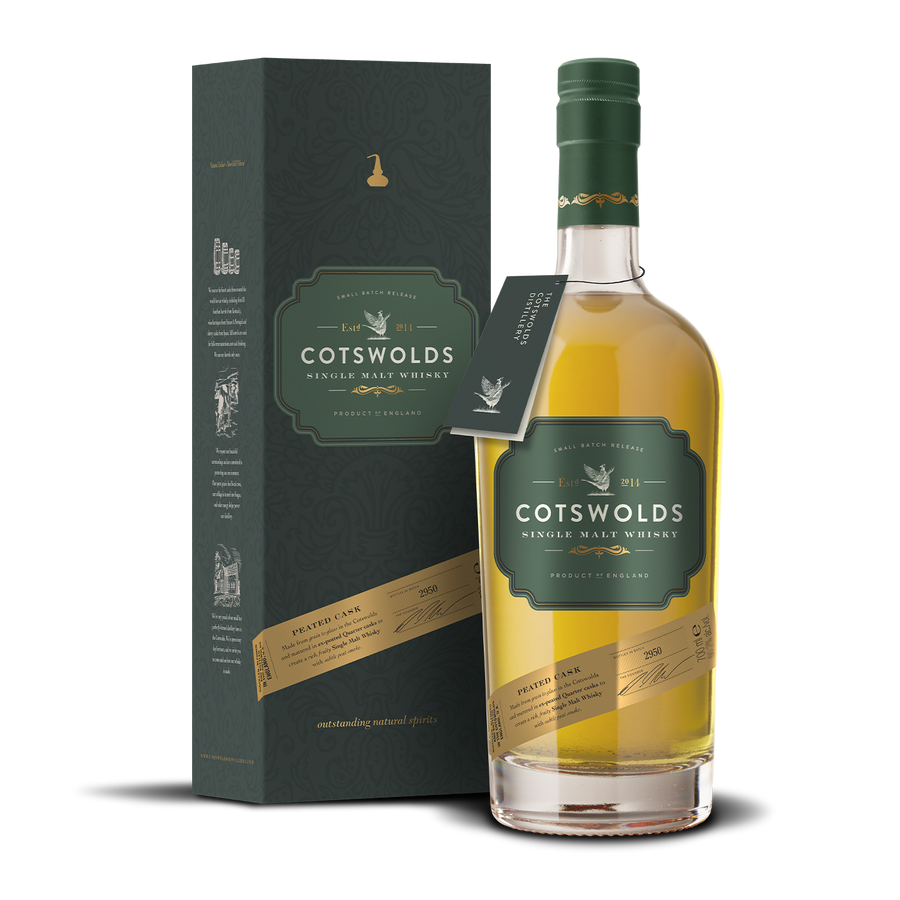
If you are taking your first steps into smoky whisky, this is the one to try. Gently smoky, without losing any depth of flavour.
Something Even Subtler: Our Harvest Series
If you want just a whisper of smoke, our limited edition Harvest Series is worth exploring. Each release blends different casks, and the latest two both carry a gentle touch of smoke.
Round Hill Harvest, our 2026 release, is a marriage of ex-maple syrup casks and Spanish oak Oloroso sherry hogsheads. Rich and full-bodied, it brings malt loaf, maple and salted caramel, with orchard fruit and a light touch of smoke. Limited to 1,200 bottles.
Wychwood Harvest marries ex-Bourbon casks with port casks filled almost a decade ago. Expect stewed berries, blackcurrant and soft vanilla, with a gentle wisp of peat.
Buying for someone curious about smoky whisky?
A gently smoky single malt is a lovely way to introduce someone to peat. Find whisky, gift sets and glassware for every budget in our Christmas Gift Guide.
How to Enjoy Smoky Whisky for the First Time
You won’t necessarily fall for peat by starting with the smokiest bottle on the shelf. Trying whiskies with different flavours, and different levels of smoke, is the best way to find what you enjoy.
New to peated whisky? Start with one of these:
- A peated cask single malt, like our Peated Cask
- A whisky with just a touch of smoke, like Round Hill Harvest
- A lightly peated single malt or blended malt
- Miniatures, so you can try a few styles side by side

Smoky Whisky Food Pairings
Smoky whisky is lovely with savoury food, such as grilled steak, charcuterie, cured meats and aged cheese. Salty, rich and fatty foods balance the smoke beautifully. Seafood and fresh herbs work well with coastal, maritime styles.
Olives are another great match. Try good Nocellara olives in olive oil with our Peated Cask Single Malt.
It doesn’t need to be fancy, either. A smoky dram is just as good with your favourite crisps, whether that is salt and vinegar, cheese and onion or Nik Naks. If you have a sweet tooth, try a rich chocolate brownie or a pineapple upside-down cake.
Our favourite foods to pair with smoky whisky:
- Charcuterie and cured meats
- Grilled meat
- Aged cheese
- Herby fish pie
- Olives
- Crisps
- Dark chocolate
- Caramelised fruit
Smoky Whisky Cocktails and Mixers
Some whisky fans will tell you never to mix a smoky single malt. Neat is a great way to get to know one, but there are no rules. Here are three ways to try it.
1. Add water or ice
A splash of water is not sacrilege. Many whiskies are diluted to around 40 to 46% before bottling, but our Peated Cask is bottled at cask strength, so a few drops of water will soften the intensity and open up more flavour. Ice makes a refreshing serve, or use whisky stones to chill your dram without diluting it.
2. Add a mixer: the Smokey Cokey
Our Peated Cask brings tropical fruit, vanilla and sweet smoke, and it is brilliant with a full-fat cola. Play with the proportions until it tastes right to you. Cherry cola, vanilla cola and Appletiser are all worth a try too.
3. Make a cocktail
Start with a smoky Old Fashioned, with sugar and bitters: classic, refined and slightly sweet. Next, try a Godfather, where amaretto picks up the vanilla notes of the Peated Cask. And for something different, our fruity spirit makes a surprisingly good Piña Colada, with a gentle touch of smoke you won’t have tried before.
Can Whisky Be Smoky Without Peat?
Peat smoke is the most common source of smoky flavour, but not the only one.
- Ex-peated casks: like our Peated Cask, the barley is unpeated and a gentle smoke comes from the cask.
- Charred casks: Bourbon barrels are heavily charred inside, which can add toasty notes like burnt caramel and toasted marshmallow, though not true smoke.
- Other fuels: some distillers dry or smoke their barley over wood or other fuels for a different style of smoke.
- Production: some yeasts and distillation choices can add faintly toasted or charred notes, though this is less common.
The difference between peat and smoke
Peated whisky gets its flavour from peat smoke used to dry the barley, which gives earthy, medicinal or maritime notes. Other types of smoke, from casks or other fuels, tend to be softer, sweeter and more like a campfire or toasted wood.
The best smoky whiskies without peated barley
If you want smoke without the heavy, medicinal side of peat, choose a peated cask single malt, where the barley has never been smoked. Or, for toasty rather than smoky notes, try a whisky matured in charred ex-Bourbon casks.
Frequently Asked Questions
Is Cotswolds whisky peated?
Our spirit is made from unpeated barley. Our Peated Cask Single Malt gets its gentle smoke from maturing in casks that previously held peated Islay whisky.
Which regions are known for smoky whisky?
Islay, an island off the west coast of Scotland, is the most famous home of heavily peated whisky. Smoky whiskies are also made in other parts of Scotland and around the world, including England.
How do I develop a taste for peated whisky?
Take it slowly. Start with gently smoky whiskies, like a peated cask single malt, and work up to stronger styles as you get used to the flavour. Try new things, ask for recommendations, and enjoy the journey.
Is peated whisky better than unpeated?
Neither is better. It all comes down to personal taste. There is no need to tackle the smokiest whiskies straight away.
What to Read Next
Your guide to choosing the best fruity whisky
Your guide to choosing the best vanilla and caramel whisky
Your guide to choosing the best spicy whisky
Your guide to choosing the best floral and herbal whisky